



Reflections from our panel at the SISO CEO Summit
Gabriella Rimmer, Director at Plural Strategy, moderated a panel at the SISO CEO Summit in Kiawah Island on innovative revenue models in B2B events. She was joined by Alison Jackson, CEO of Nineteen Group; Chris Gallon, CEO of Clarion EMEA; and Paul Miller, CEO of Questex.
The revenue mix is shifting
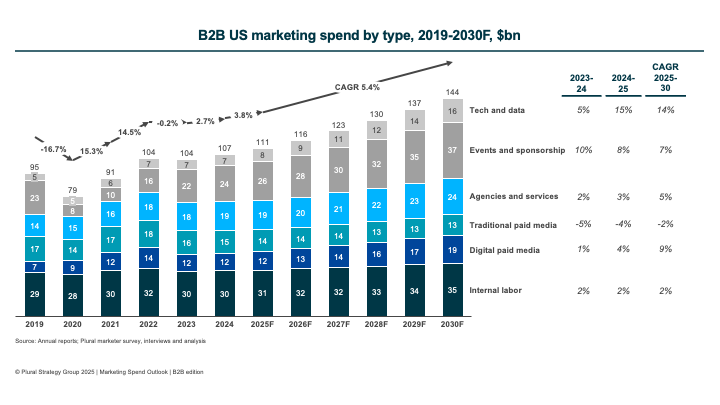
B2B event spend is outperforming the wider marketing mix, and our latest Marketing Spend Outlook suggests this trend has further to run. Beneath that headline growth, a more interesting question is emerging: where is that growth coming from, and how is the revenue mix evolving? We sat down with three of the industry’s most experienced operators at the SISO CEO Summit to explore where the opportunities lie and how organisers are moving to capture them.
Where non-stand growth is coming from
Across the discussion, three themes emerged in how organisers are capturing revenue beyond the floor plan.
Charging vendors for the value they are getting:
Many events carry an under-monetised segment in their attendee list: vendors attending as regular delegates, paying the same fee as buyers despite having an entirely different commercial agenda and budget. Being deliberate about identifying and separately pricing this group unlocks meaningful significant revenue from a segment that was previously undercharged.
Expanding budget capture beyond the show floor:
As vendor marketers grow more sophisticated, passive floor presence is increasingly hard to justify internally. Paid introduction models, where vendors pay for structured access to buyers whose profile aligns with their solution, are inherently more measurable than a stand, and speak directly to the marketer who needs to demonstrate ROI.
Following the CMO budget:
Some organisers are being increasingly intentional about deepening cross-channel conversations with marketers, identifying the vendors with the budget and mandate to spend at that level. The shift is not just about new products but about a different commercial conversation with the right people.
What makes it work and why now?
The conditions enabling new revenue models have shifted materially. Vendor marketers are more sophisticated and more demanding in how they evaluate event investment, asking harder questions about ROI and looking for products that can answer them.
Two enablers came up consistently across the discussion:
- Data: Maturing data infrastructure has given organisers genuine insight into their audiences, underpinning smarter pricing, better product development, and a more credible ROI conversation with customers.
- Team: These models do not sit comfortably on top of net-square-metres sales motion. Multi-product, consultative selling requires different skills and different incentive structures.
A word of caution
Stand sales remain the core of most event businesses and the primary source of their financial predictability. Non-stand models, particularly digital products and marketing services, can be lumpier, harder to forward-sell, and more margin-sensitive if under-priced or poorly scoped. The case for building them is a stronger, more diversified business, rather than a simpler one.
The more immediate risk is distraction. Pursuing new revenue streams too aggressively can divert sales effort, management attention, and capital away from what is actually working. The organisers seeing the most success are disciplined about where innovation genuinely serves the customer, and clear about when the strongest answer is a well-run traditional show.
So, are net-square-metre revenues declining?
It depends and it may not be the right question. What is clearer is that the share of revenue coming from beyond the floor plan is growing across the industry, and whilst attendee-side monetisation in particular is still in its early stages, the organisers investing in the right enablers today are building businesses that are well placed to capture what comes next.


